
Positioning & Surveying Equipment Since 1946
Mining operations face constant geological shifts that demand precise, reliable oversight. To maintain safety and operational efficiency, site managers need robust equipment that can withstand harsh environments.
This is where KOLIDA’s high-precision surveying instruments come into play, offering automated systems that help operators track ground movements and prevent disasters.
This post explains the fundamentals of mine monitoring, highlights the KOLIDA technology that makes it possible, and explores a real-world application showcasing its effectiveness.
Mine monitoring is the continuous observation of geological structures, ground stability, and structural integrity within a mining site. Using advanced sensors and surveying tools, engineers track minute changes in the earth’s surface and underground tunnels over time.
This process is critical for several reasons:
Creating a reliable monitoring system requires a network of precise and durable instruments.
Based on recent successful deployments, the following KOLIDA mining equipment is frequently used to secure mining sites:
The true value of this technology is best understood in action.
Recently, an ancient underground salt mine in Eastern Europe required an urgent monitoring upgrade.
The site featured a mining depth exceeding 200 metres across six layers, with each layer covering over 32,000 square metres. Submerged by water, the surface geology was highly unstable.
Severe areas experienced displacements of 10 to 20 centimetres per month. Authorities feared a collapse could send highly concentrated saltwater into nearby rivers, causing severe ecological damage.
The mine’s existing monitoring setup was inadequate. The robotic total station fluctuated by more than 6 millimetres, the service fees were exorbitant, and the software was hosted on foreign servers, delaying critical support.
Delivering a reliable solution
Monitoring engineers designed a new system using KOLIDA technology, centred around a highly accurate robotic total station, four MR1 displacement monitors, and the SMOS software platform.
The installation and commissioning were completed in just seven days. Local teams poured reinforced concrete columns, while engineers configured the communication modules, completed the prism learning process, and tailored the SMOS software to collect four sets of data daily.
Outstanding project outcomes
The newly installed system delivered immediate improvements for the client.
The upgrade successfully eliminated previous observation blind spots, achieving full coverage of the high-risk zones. Data accuracy improved dramatically, with observation variations dropping to 3 millimetres or less.
Additionally, the new KOLIDA setup cost 30% less than the previous solution. Because the SMOS monitoring software was deployed on local servers, the mine operators could easily meet local safety supervision requirements and customise their reporting dashboards without delay.
Securing your site requires dependable tools and an experienced supplier.
Afgen is a trusted supplier of KOLIDA equipment in South Africa, providing high-precision surveying instruments to the mining and construction sectors.
Browse our online store to explore the latest KOLIDA technology for sale, including advanced GNSS systems, 3D scanners, field controllers, and total stations.
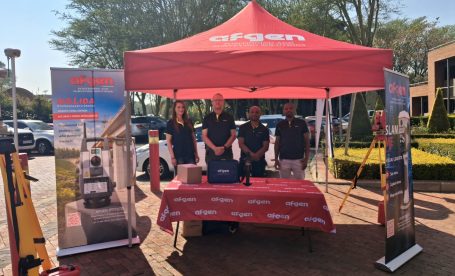
Some of the best conversations in surveying happen when current technology meets the people who will use, teach, and develop it next. That’s exactly what unfolded when Afgen joined Tshwane
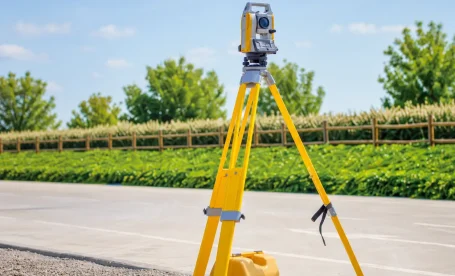
Quick answer: The Topcon GM-60 Series is a reflectorless total station built for surveyors and construction professionals who need reliable field performance. It offers non-prism measurements up to 500m, an
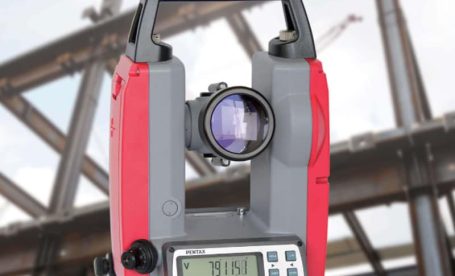
TL;DR: Electronic theodolites are precision instruments used in South African construction to measure horizontal and vertical angles with high accuracy. Their top five applications include construction site layout, building alignment,