
Positioning & Surveying Equipment Since 1946
Time is money on a construction site, and accuracy is the foundation of every successful build.
Total stations have long been the workhorse of the surveying industry, providing the precise measurements required for complex layouts, mapping, and monitoring. For constructors and surveyors across South Africa, choosing the right equipment can dictate the efficiency and profitability of an entire project.
If you are evaluating total stations for sale, you might be wondering whether to upgrade your gear or stick to traditional methods.
This post will help you understand the differences between a robotic total station vs manual total station so you can make an informed decision for your next project.
Understanding the core differences between these two types of equipment will help you align your investment with your operational needs.
Robotic Total Station
A robotic total station is an advanced surveying instrument that operates via remote control. Using built-in motors and communication systems, it can automatically track a prism mounted on a pole. This allows a single operator to manage both the instrument and the pole from a distance, seamlessly controlling the entire data collection process via a field controller.
The primary advantage of a robotic unit is efficiency. By eliminating the need for a two-person team, you drastically cut down on labour costs and complete surveys much faster. These devices also offer high precision, rapid target acquisition, and automated monitoring capabilities.
Robotic instruments are ideal for large-scale infrastructure developments, continuous mine monitoring, and complex topographical surveys where speed and high data volumes are critical.
If you are looking for top-tier robotic total stations in South Africa, the KOLIDA KTS-591 Robotic Total Station offers outstanding features, including one-man survey operation, automated monitoring, and a 300m prism search function.
Manual Total Station
A manual total station requires a two-person crew to operate effectively. One surveyor stands at the instrument to aim and take measurements, while a second person holds the prism pole at the target point. The operator manually turns the instrument and aligns the crosshairs to record data points.
Manual devices are highly reliable, simple to learn, and cost-effective. They do not rely on motors for turning or on complex remote tracking systems, which means they have a lower initial purchase price and generally require less maintenance over time.
These instruments remain highly relevant for smaller building sites, boundary surveys, and projects with tight budgets where a two-person crew is already available.
Choosing the best instrument comes down to your specific working environment and team setup.
Consider the following scenarios:
Finding the right surveying equipment can feel overwhelming, but we are here to help.
At Afgen, we supply a wide range of premium total stations for sale to suit the diverse needs of South African surveyors and construction professionals.
We proudly supply some of the best robotic total stations in SA, namely the KOLIDA KTS-591 Robotic Total Station, an all-in-one professional tool designed for rapid layout, survey, and monitoring.
Both robotic and manual total stations offer incredible accuracy and value to the modern surveyor.
Manual stations deliver reliable, cost-effective performance for smaller teams, while robotic instruments provide unmatched speed, one-man operation, and advanced tracking for demanding sites.
Ultimately, the best equipment is the one that fits your workflow, workforce, and budget.
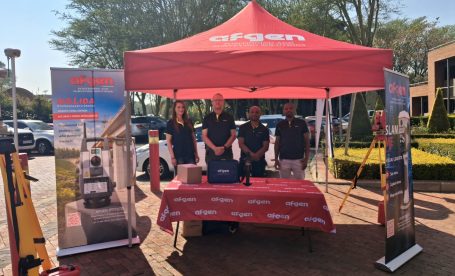
Some of the best conversations in surveying happen when current technology meets the people who will use, teach, and develop it next. That’s exactly what unfolded when Afgen joined Tshwane
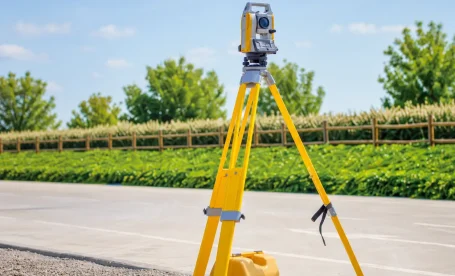
Quick answer: The Topcon GM-60 Series is a reflectorless total station built for surveyors and construction professionals who need reliable field performance. It offers non-prism measurements up to 500m, an
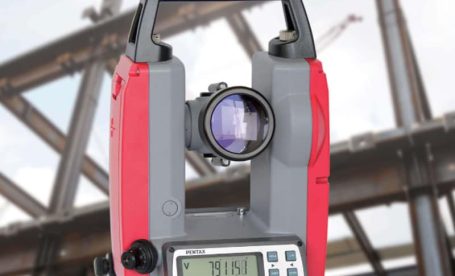
TL;DR: Electronic theodolites are precision instruments used in South African construction to measure horizontal and vertical angles with high accuracy. Their top five applications include construction site layout, building alignment,